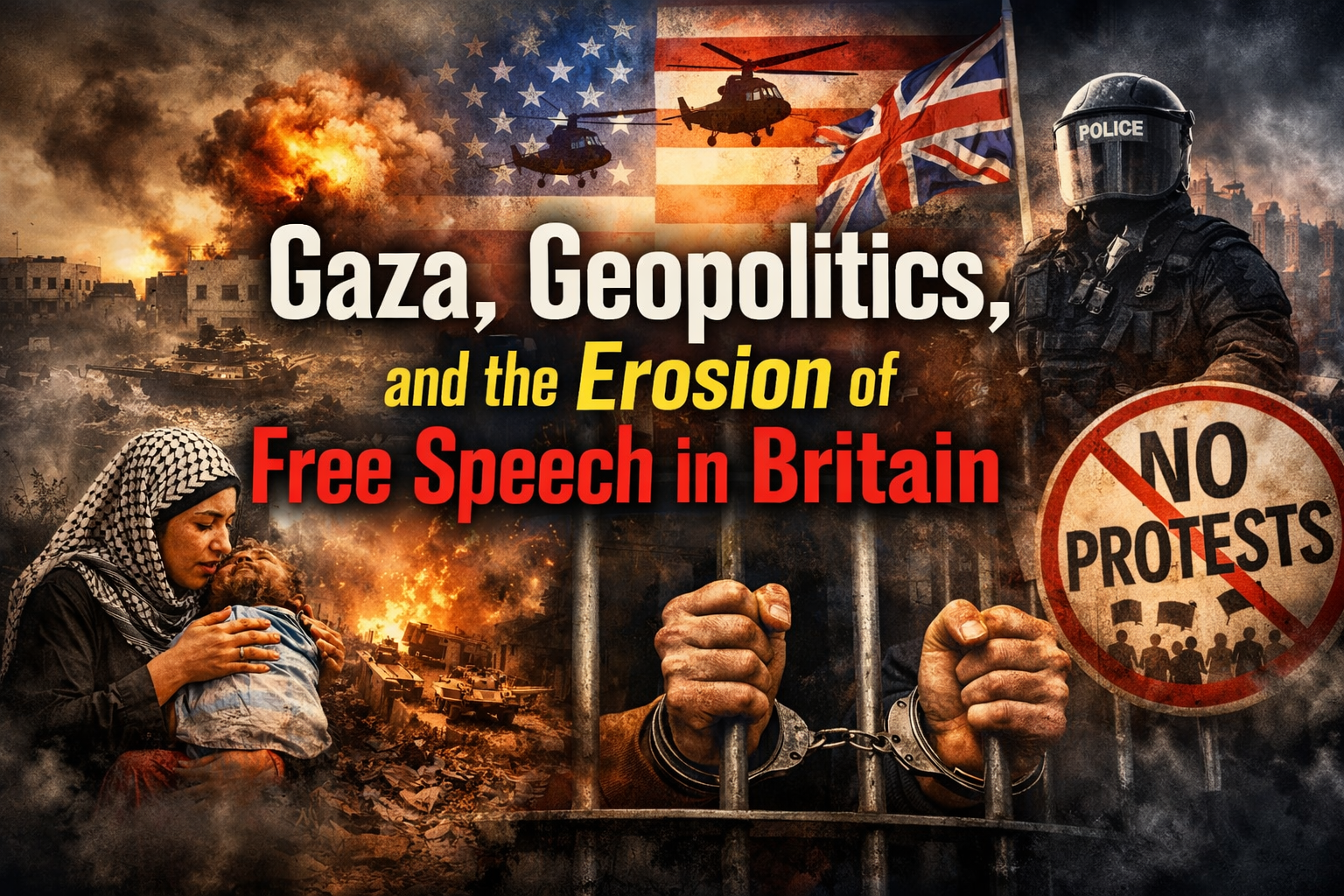
The tragedy unfolding in Gaza is the latest, and perhaps the most catastrophic, chapter in a conflict that has roots stretching back over a century.
The region historically known as Palestine was home to both Arabs and Jews under Ottoman rule until Britain took control after World War I. The 1917 Balfour Declaration, in which Britain pledged support for a “Jewish homeland” in Palestine, set the stage for decades of population shifts, conflicting promises, and tension between Jews seeking refuge and an Arab population with deep historical ties to the land.
By 1947, the United Nations sought to partition Palestine into separate Jewish and Arab states, a plan met with resistance from local Arabs and neighbouring countries. 1In 1947 the UN General Assembly adopted Resolution 181, proposing to divide Palestine into independent Arab and Jewish states with Jerusalem under a special international regime. When Israel declared independence in 1948, war broke out and hundreds of thousands of Palestinians were displaced. Since then, the Palestinian quest for statehood has collided with Israel’s desire for security, triggering recurring wars, uprisings, and cycles of violence.
Historical Complexity and Modern Atrocities.
Whilst I respect the struggles of the Israeli people and their drive for a safe homeland, especially in the aftermath of the Holocaust, I cannot ignore the multitude of Arabs already living in Palestine, and the complexities exacerbated by rival migrations and strategic interests in the region. Successive right‑wing Israeli governments have expanded settlements widely regarded by the UN and most of the international community as illegal under international law, and the failure to recognise a Palestinian state has bred not just resentment but violent resistance, culminating in the 7 October 2023 Hamas attack.
That attack was deeply tragic, killing around 1,200 people and leading to more than 240 hostages being taken into Gaza. It was as much a product of decades of unresolved conflict as it was a flashpoint. Israel’s military response has been overwhelming: since 7 October 2023 more than 71,000 Palestinians have been reported killed in the Gaza Strip, including at least 21,000 children, and over 170,000 have been injured, with women and children making up the majority of the dead. 2UNICEF reports that between 7 October 2023 and early February 2026, over 71,800 Palestinians were killed in Gaza, including more than 21,000 children, and more than 171,000 were injured. Unsurprisingly, allegations of war crimes and grave humanitarian violations have been levelled by respected human rights organisations and UN officials. 3OCHA situation reports describe massive destruction of civilian infrastructure, repeated displacement of families and severe restrictions on humanitarian access across the Gaza Strip.
The US–Israel Relationship
To fully understand the course of events, and the international response, we must acknowledge the long‑standing role of the United States in the region. The US has consistently provided diplomatic, military, and financial support to Israel, justifying this as backing for a democratic ally and a “stabilising influence” in the Middle East. 4US administrations have frequently presented Israel as a bulwark of democracy and order in a turbulent region, despite repeated international criticism of its settlement policy and military actions.
Beneath this rhetoric lie deeper strategic interests: securing access to vital natural resources, especially oil, containing Soviet and later Russian influence, and countering the spread of communism during the Cold War. Israel’s emergence as a militarily strong, technologically advanced, and reliably pro‑Western state made it central to US objectives in the region. These motivations have never fully disappeared. In the present day, Cold War logic has evolved into rivalry with Iran and the defence of regional alliances that continue to serve American geopolitical and economic goals.
Washington’s unwavering support for Israel continues even as global criticism mounts over the humanitarian crisis in Gaza. This alignment shapes not only US policy but also the political stance of allies like the UK.
What Troubles Me Now
Whilst the human cost of the war in the Middle East troubles me deeply, the effect it has had on freedom of speech here at home in the UK is equally alarming. Our government, regardless of party, has largely echoed US policy and now enforces some of the harshest restrictions on protest and public expression seen in living memory.
Activist groups such as Palestine Action have been formally proscribed as terrorist organisations under the Terrorism Act 2000, primarily on the basis that their campaign of serious property damage was assessed by the government as terrorism,placing them on the UK’s list of proscribed organisations alongside groups such as ISIS and al-Qaeda, despite the vastly different nature of their activities. 5UN human rights experts have warned that designating a protest movement as “terrorist” for acts not intended to cause death or serious injury is inconsistent with international standards. Hundreds have been arrested for participating in protests or holding placards that authorities claim show support for proscribed organisations. 6The UN Human Rights Office has described the ban on Palestine Action as a “disturbing misuse” of UK counter‑terrorism legislation that risks impermissible restrictions on freedom of expression, peaceful assembly and association. In practical terms, this means expressions of conscience that once fell well within the norms of democratic protest can now carry sentences of up to 14 years in prison. 7Under the Terrorism Act 2000, offences relating to membership, support or associated symbols of a proscribed organisation can carry penalties of up to 14 years’ imprisonment.
My View: Complexity Without Excuse
I see no contradiction in mourning the suffering on both sides of this conflict. Nor can the continued holding of hostages or attacks on civilians be morally justified. I recognise Israel’s existential fears and the trauma of past persecution, but equally the historic and ongoing dispossession and pain of the Palestinian people. What is indefensible, both in Gaza and at home, is the imposition of overwhelming force and the silencing of those who, in good faith, seek to challenge policy or defend human rights.
History warns us that freedoms rarely vanish all at once. They erode incrementally, often during moments of crisis when governments claim extraordinary powers in the name of security or stability. The United States’ strategic priorities, oil access, regional dominance, and Cold War rivalry, have shaped British policy for decades, and that influence continues to affect what can be said, and by whom, in our public sphere.
The lesson is clear: rights to speak, protest, and dissent are most in danger at precisely the moments when they are most needed. If we surrender these principles now, in times of war and political pressure, we may one day find that they are gone for good.
- 1In 1947 the UN General Assembly adopted Resolution 181, proposing to divide Palestine into independent Arab and Jewish states with Jerusalem under a special international regime.
- 2UNICEF reports that between 7 October 2023 and early February 2026, over 71,800 Palestinians were killed in Gaza, including more than 21,000 children, and more than 171,000 were injured.
- 3OCHA situation reports describe massive destruction of civilian infrastructure, repeated displacement of families and severe restrictions on humanitarian access across the Gaza Strip.
- 4US administrations have frequently presented Israel as a bulwark of democracy and order in a turbulent region, despite repeated international criticism of its settlement policy and military actions.
- 5UN human rights experts have warned that designating a protest movement as “terrorist” for acts not intended to cause death or serious injury is inconsistent with international standards.
- 6The UN Human Rights Office has described the ban on Palestine Action as a “disturbing misuse” of UK counter‑terrorism legislation that risks impermissible restrictions on freedom of expression, peaceful assembly and association.
- 7Under the Terrorism Act 2000, offences relating to membership, support or associated symbols of a proscribed organisation can carry penalties of up to 14 years’ imprisonment.

 20
20